

Corpus Christi
Cathedral
Artistic and liturgical renovation
Corpus Christi, Texas — United States
A project by Progetto Arte Poli
A project for the heart of the diocese
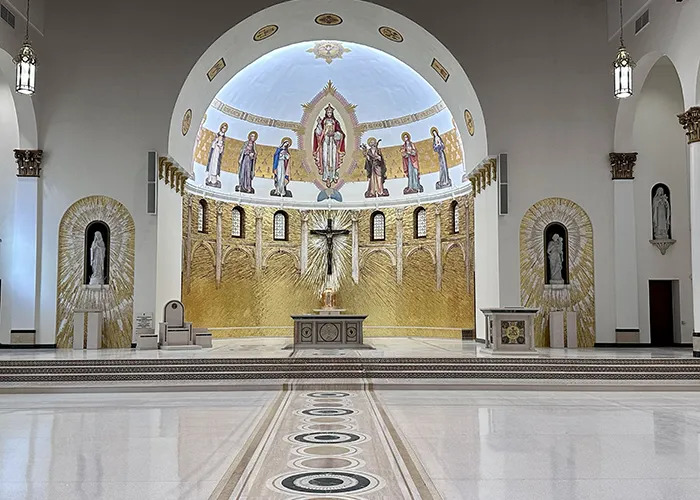
Corpus Christi Cathedral is the center of liturgical life for the Texas diocese, established in 1912. Its renovation responds to the need to renew the spaces used for worship while enhancing its artistic heritage and its role as the mother church of the diocese.
Bishop Michael Mulvey entrusted Progetto Arte Poli with the design of the artistic and liturgical renovation. The work forms part of a broader program of restoration and building improvements, with construction and building services work carried out by the contractors appointed by the client.
The design enhances the relationship between the congregation, altar, ambo, cathedra and tabernacle. A brighter color palette accompanies the new artworks, in dialogue with the architecture and the existing decorations that have been retained.
The apse mosaic: a field of light
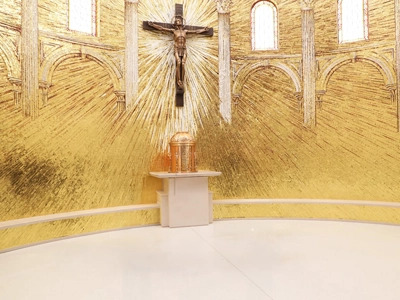
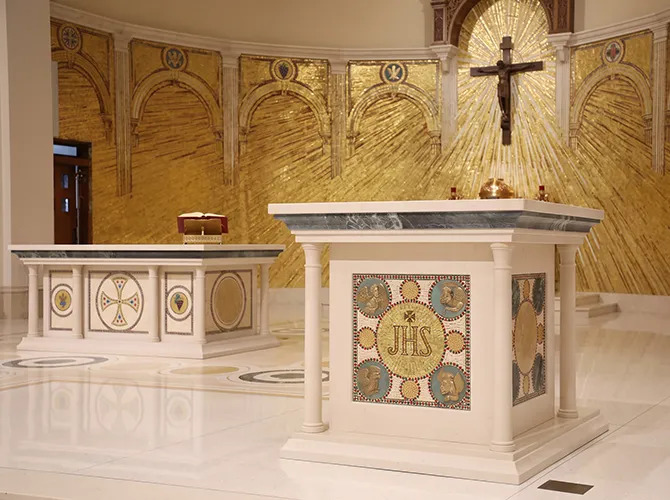
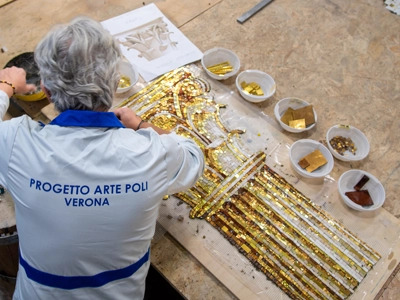
The apse wall is covered with a pure gold-leaf mosaic, created using traditional mosaic techniques. The golden surface integrates with the existing decoration and provides the setting for the new crucifix.
The composition radiates light in relation to the figure of Christ. Mosaic and sculpture thus form a unified whole, in which the light reflected by the tesserae helps define the visual focus of the sanctuary.
The bronze crucifix
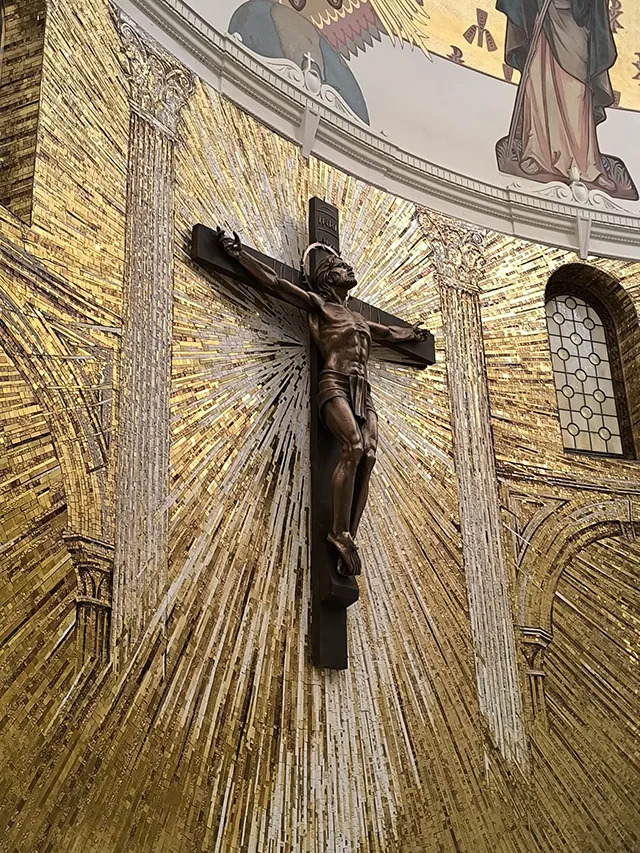
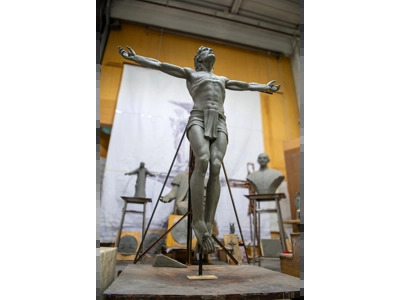
Created using lost-wax casting, the crucifix was designed in relation to the mosaic wall. The body of Christ stands out against the golden background, at the point toward which the rays of the composition converge.
The iconographic design depicts Jesus looking toward the Father. Its reference to Psalm 22 brings together the cry of suffering, trust and the hope of salvation. The luminous crown and the tones of the bronze patina support this interpretation of the Passion.
Three portals, a journey through the Gospel
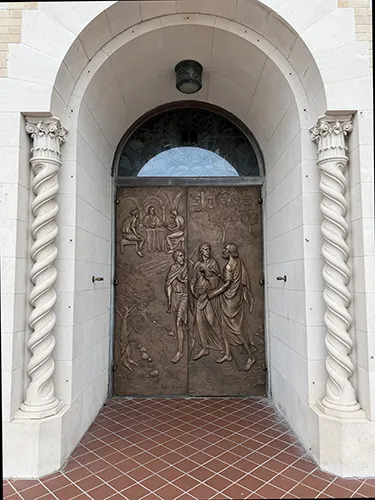
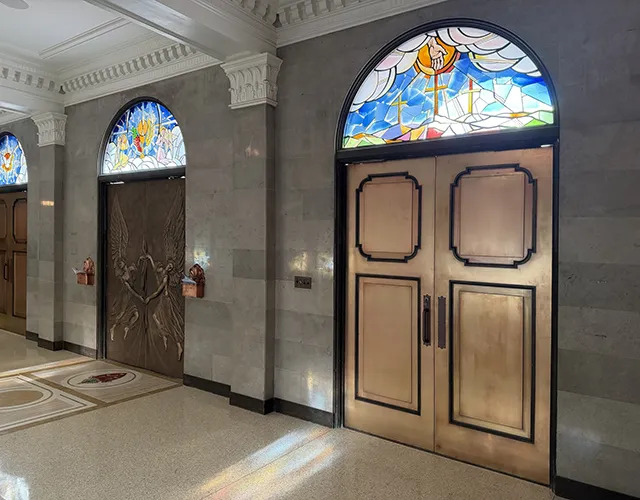
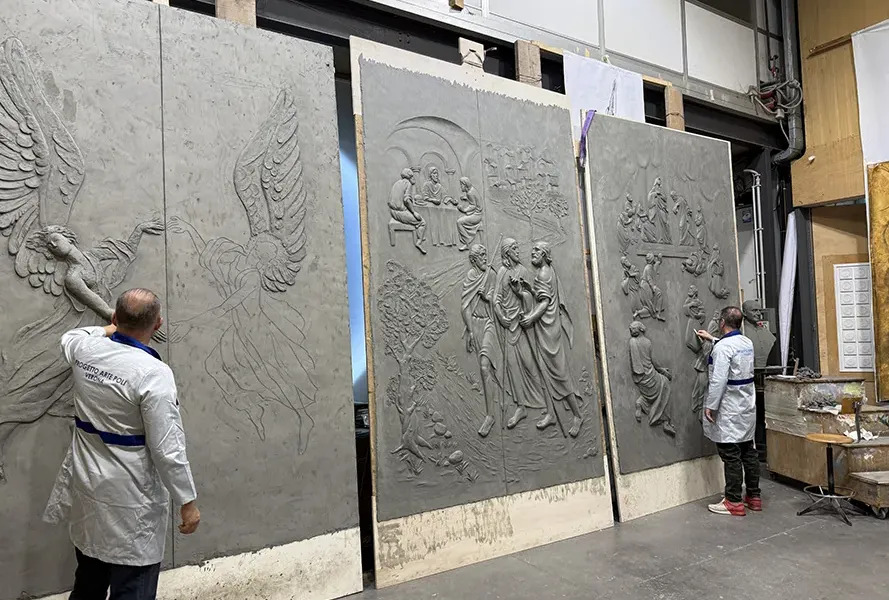
The three monumental portals express the theme of entering the Christian community through bronze reliefs. The artworks were produced using the lost-wax casting technique.
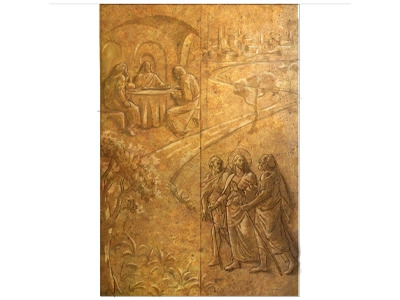
In its account of the completed installation, the Diocese describes the central portal depicting the journey of the disciples to Emmaus, their listening to the Scriptures and their recognition of Christ in the breaking of bread. The portal on the left presents the mystery of Jesus’ death, resurrection and ascension; on the right, Pentecost depicts the descent of the Holy Spirit upon Mary and the apostles.
The iconographic sequence connects Easter, the encounter with the Risen Christ and the mission of the Church. The interior decoration of the central portal includes two angels, conceived as opening the doors and welcoming the faithful.
Mouth-blown glass and grisaille painting
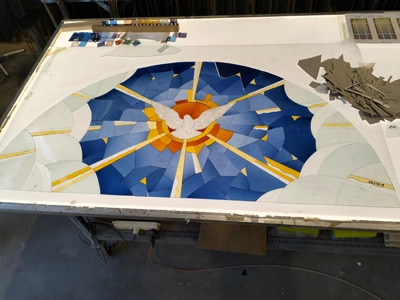
The windows above the three bronze portals and in the chapel use mouth-blown glass painted in grisaille. Handcrafting allows the design and color nuances to be developed in relation to the light.
The windows complement the figurative language of the entrance and respect the building’s historic character. Their production process includes developing the preliminary design, cutting the glass and painting.
From the entrance to the Eucharistic table
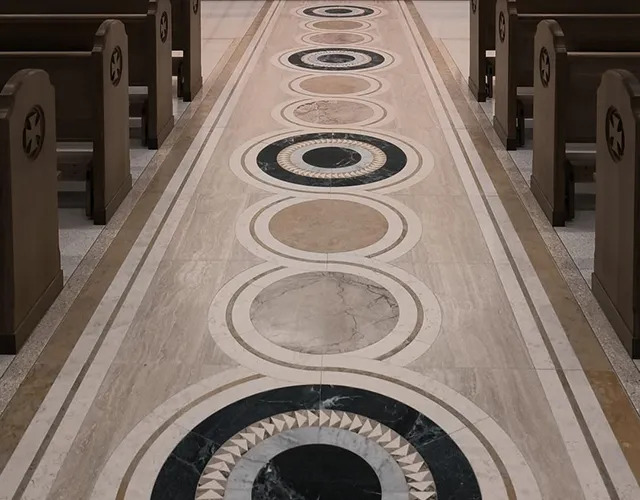
The liturgical renovation establishes a path from the baptismal font at the entrance to the altar. The position of the font recalls Christian initiation and the journey toward the celebration of the Eucharist.
The new altar, ambo and cathedra are designed in relation to one another and to the proportions of the sanctuary. The symbols of bread and wine on the altar emphasize its Eucharistic meaning. The tabernacle returns to the center of the apse, while the ambo clearly identifies the place where the Word is proclaimed.
The celebration on June 4, 2026 marked the consecration of the new altar. Following the placement of the relics, the rite included anointing with chrism, incensation and preparation of the altar for the Eucharistic liturgy.
The Good Shepherd: sculpture and painting
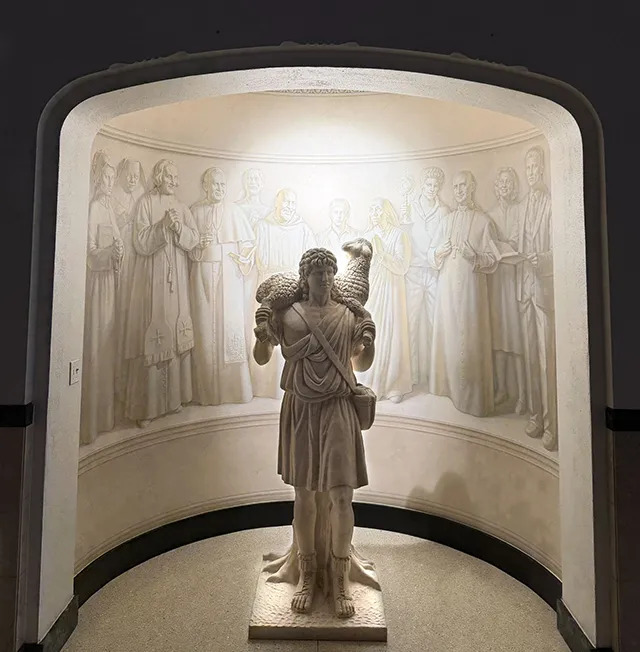
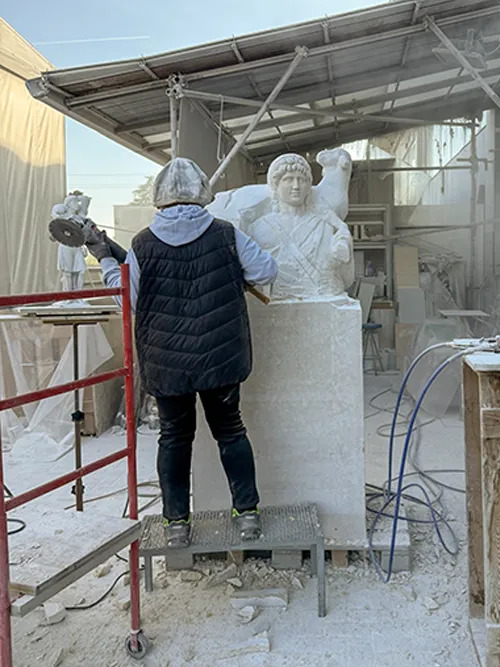
The statue of the Good Shepherd is hand-carved from a single block of marble. The Diocese documents its placement in All Saints Chapel at the completion of the interior renovation.
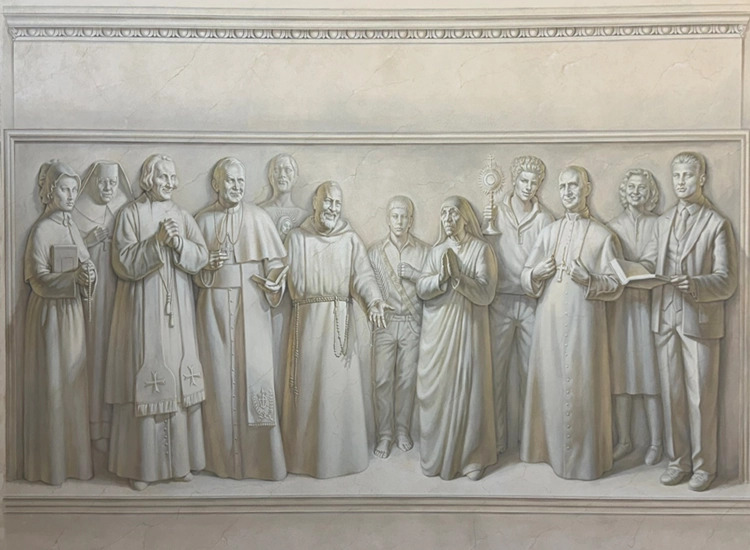
The painted decoration for the chapel was executed on canvas in the studio. Its marble-like finish and evocation of bas-relief accompany the depiction of twelve saints, bringing the sculpture into dialogue with the painted backdrop.
From the Verona studio to the cathedral
The work brings together expertise in mosaics, glass, sculpture and painting. The dialogue between different techniques allows the project to develop through sketches, models and handcrafting, through to the installation of the artworks within the liturgical space.
In July 2025, as work on site progressed, the Diocese documented the preparation in Verona of tesserae for the apse and mosaics for the area around the font and the altar steps. The bronze portals were also being produced at that time.
Reopening and completion of the artworks
The community’s return to the cathedral and the completion of the final installations are two distinct milestones in the project.
For information about our sacred art projects
Contact us
Via Bresciana 67/b,
37139 VERONA, Italy
tel +39 0458510455
fax +39 0458510298
zona Basilica di S.Pietro, ROMA
tel. 06 68309510

